Seamlessly integrating display and control units into the device housing: 4 tried-and-true methods
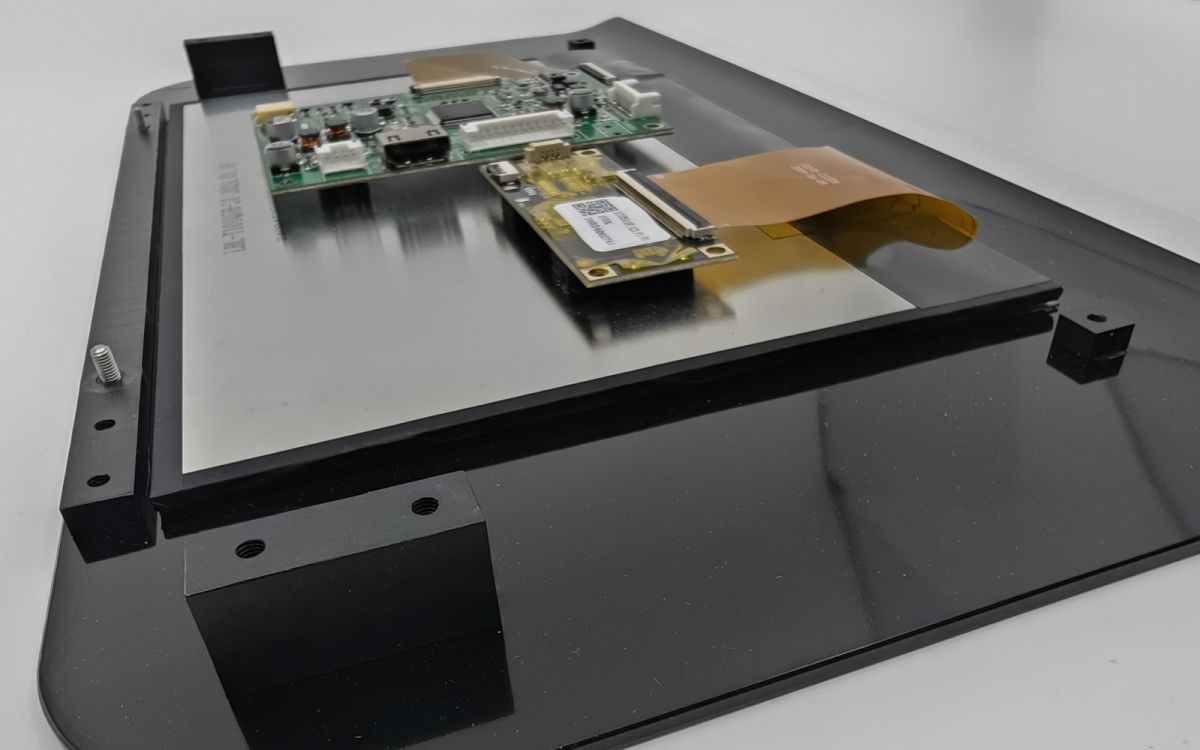
Many HMI projects start with the front panel: design, cutout, and surface finish. That’s important—but the crucial questions usually arise behind the visible surface: How securely is the display and control unit mounted in the housing? How does everything remain sealed, service-friendly, and reliable in mass production?
Based on our practical experience at MICHEL ITC, four integration methods have proven particularly effective. Which one is right depends primarily on the unit size, design specifications, tolerances, sealing concept, and assembly process.
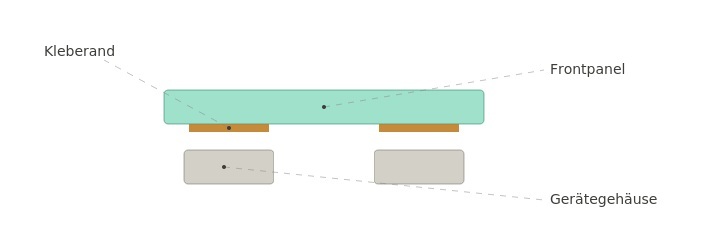
1) Bonding with a surrounding adhesive edge
Ideal when the front panel is intended to appear flat and “seamless.”
Typical advantages
- very clean, elegant appearance
- even force distribution, no visible screws
- can be easily combined with sealing and protection requirements (depending on the design)
What to keep in mind
- process reliability (dispensing, curing, pretreatment)
- service considerations: replacement/repair must be taken into account
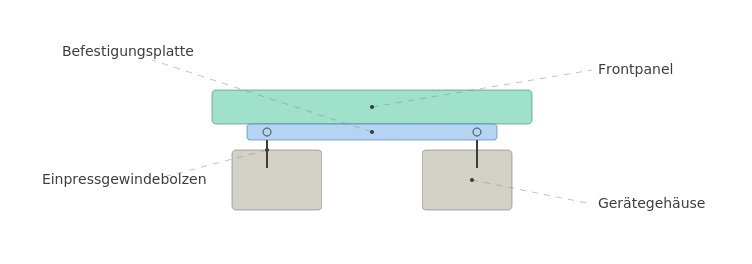
2) Mounting plates with press-fit threaded bolts
The robust solution when stability and flexibility in the assembly are required.
Typical advantages
- high mechanical stability, even for larger units
- flexible positioning and easy adaptability
- easy to install, well-suited for variants and small- to medium-volume production runs
What to keep in mind
- space requirements inside the device (installation depth, space for screws)
- chain of tolerances between the front panel, mounting plate, and housing
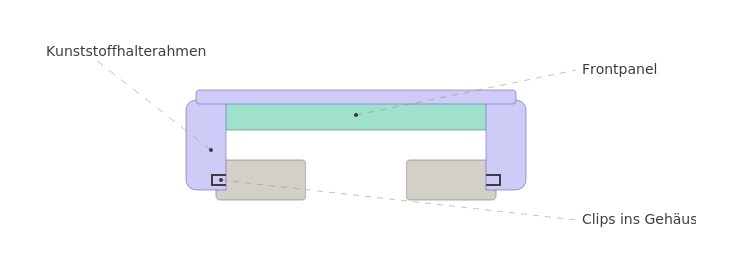
3) Injection-molded plastic mounting frames
Precise fit, consistent repeatability — particularly effective for mass production and when design specifications are clearly defined.
.
Typical advantages
- defined contact surfaces and reproducible assembly
- integrated functions (clips, sealing lips, guide elements)
- clean, “uncluttered” internal structure
What to keep in mind
- tooling and start-up costs are particularly cost-effective for higher production volumes
- early coordination of tolerances and material behavior is worthwhile
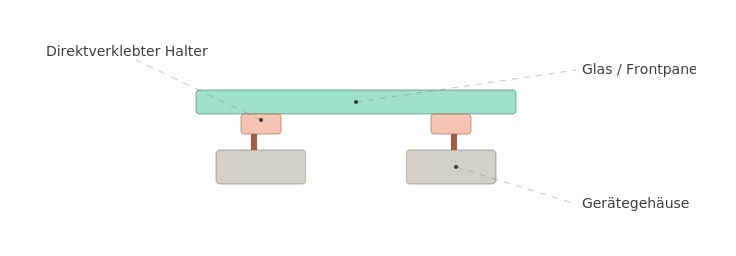
4) Directly bonded mounting brackets on the glass
Slim, efficient, and material-saving—when you need to keep the interior compact.
Typical advantages
- very low profile, fewer parts
- enables an efficient assembly process
- reduces the need for additional metal or plastic components
What to keep in mind
- suitable adhesive or bonding solution and surface preparation
- consider defined load cases (vibration, temperature changes)
How do you find the “right” method?
In practice, a quick check of the following points can help:
- Design goal: flush-mounted, frameless, visibly screwed, or “invisible”?
- Mechanics: vibration, operating forces, transport loads
- Sealing concept: splash water, dust, cleaning chemicals, IP requirements
- Installation & service: cycle time, accessibility, replaceability
- Quantity & variants: Prototype vs. mass production, many device configurations?
This often makes it quite clear which integration method is the most cost-effective and reliable — and sometimes a combination makes sense (e.g., adhesive bonding + additional defined mechanical support).
Want to do a quick sparring check?
If you’re currently integrating a display or control unit into an enclosure (or want to improve an existing design), we offer manufacturer-neutral advice, help you plan the installation, and assist you in choosing a solution that’s functional, easy to implement, and suitable for mass production.